

Sales at a web agency moves faster than people expect

An enquiry arrives, you work out the customer's situation, you prepare for the meeting, you send the quote. All of that follows on in a short space of time.
Inside that flow, the first thing we needed was not a feature. It was a structure that did not get in the way of the sale.
We wanted a CRM that did not create new work, but held the sales flow that was already running.
So the starting point of the enterprise CRM we wanted was not a set of complicated features. It was a way of working you understood immediately.
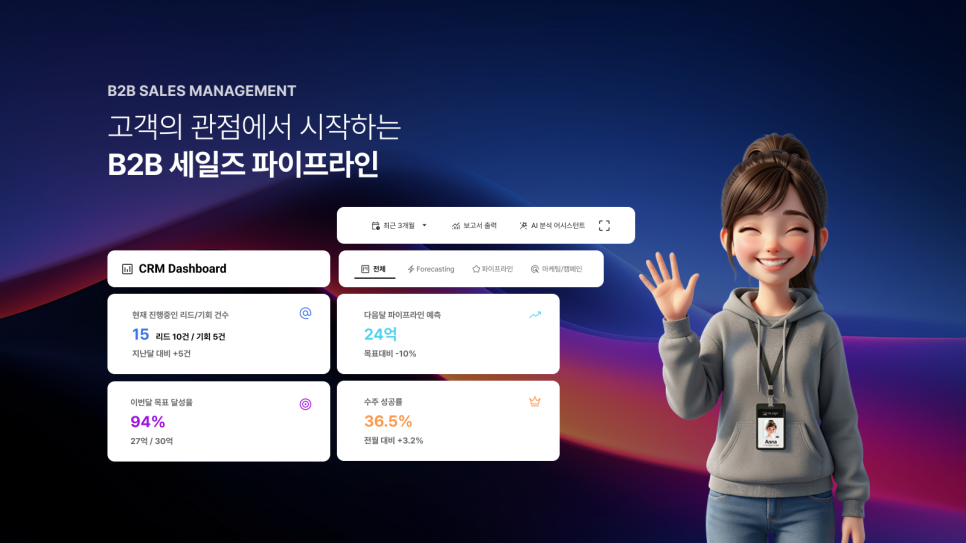
An experience you do not have to think about
In sales, speed comes before deliberation. The moment you stop to work out where to make a change, the flow breaks.
So we set three conditions.
- Where to make a change should be visible without an explanation.
- A record should be findable again the moment it is written.
- Entering and editing should run on without a break.
This was not about convenience. It was the condition for keeping a sale moving.
A CRM should not be a system you work at using well. It should be a system that simply gets used.
Sales moves as a structure, not as one person
A sale starts with one person, but several roles are involved at once. Sometimes the direction of a quote needs reviewing. Sometimes a technical question needs answering. Sometimes the customer's situation has to be judged together.
Sales, in other words, runs on a team making decisions, not on an individual.
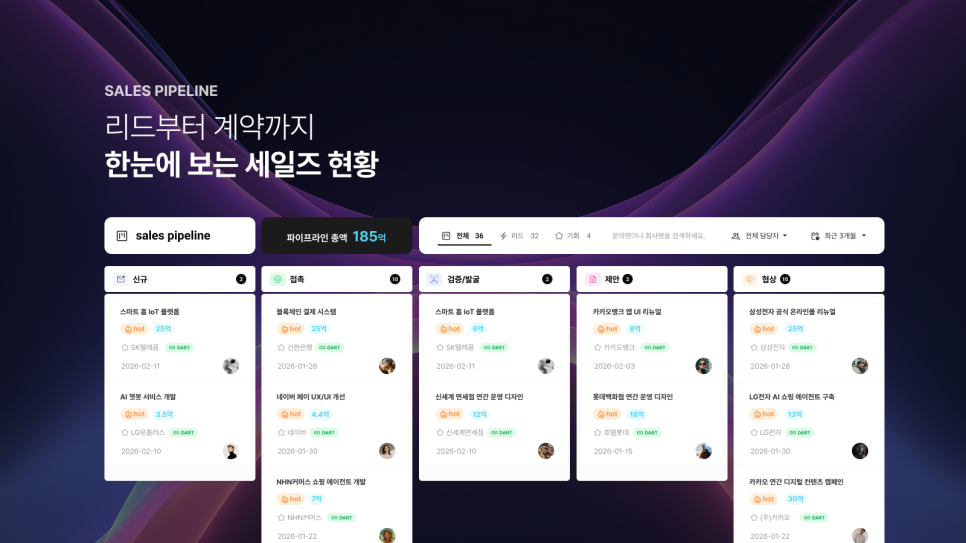
So what we needed was not a record-keeping system but a place where decisions were made. You had to be able to ask for an opinion with an @ mention, conversation had to continue on top of the record, and the state of a sale had to be visible to the whole team.
All of it had to run in one context rather than in separate places.
We decided to build it and use it ourselves
In the end we built the system ourselves.
It was less like making a finished product and more like using something and refining it as we went. We improved the experience one piece at a time, and organised a lot of information into an interface you could read. We changed the structure so the meaning of a button was visible. We made writing and editing a record run on from one another.
We added chatter-based records, so colleagues could leave an opinion the way they would in a conversation. We rebuilt quoting so it finished in a few steps.
We moved the lead data we already had into the system. We reconnected the enquiry channel on the website, so new enquiries arrive in the CRM through web-to-lead.
That is how the enterprise CRM environment we actually use started to take shape.
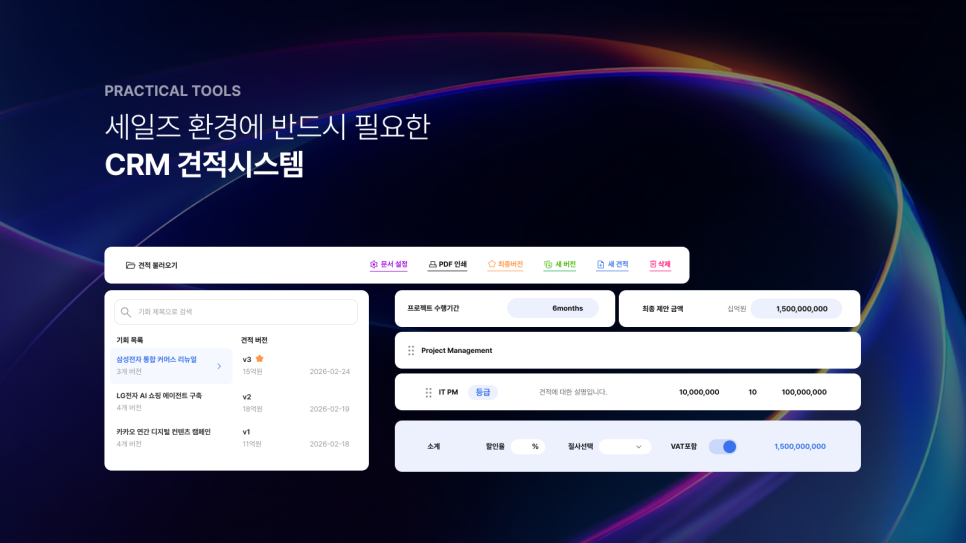
At the start it was closer to a small experiment. But using it, we began to feel the sales flow settle into shape.
Along the way, another thought arrived.
We were already running a Partner Portal to manage customers and projects. If that was true, we could run the sales management inside that same system.
So the sales system we used internally began to widen: from a CRM that managed sales into a structure that reached through to the projects.
That line of work is what became today's sufly CRM and Partner Portal.
Original post
https://blog.naver.com/musigncorp/224226549083
Next, part 4 of 4
https://blog.naver.com/musigncorp/224236822442
Previous, part 2
https://blog.naver.com/musigncorp/224226407175
Previous, part 1